
taly U20's 3-0 dismantling of France in the 2023 FIFA U20 World Cup semi-final wasn't a fluke. It was a statement. For decades, Italian youth football carried a reputation for cautious, result-first pragmatism. That night in La Plata, the Azzurrini pressed high。switched play with intent, and suffocated a French side stacked with future Premier League starters. The performance felt like a quiet revolution — and it's been building for years.What's changed?
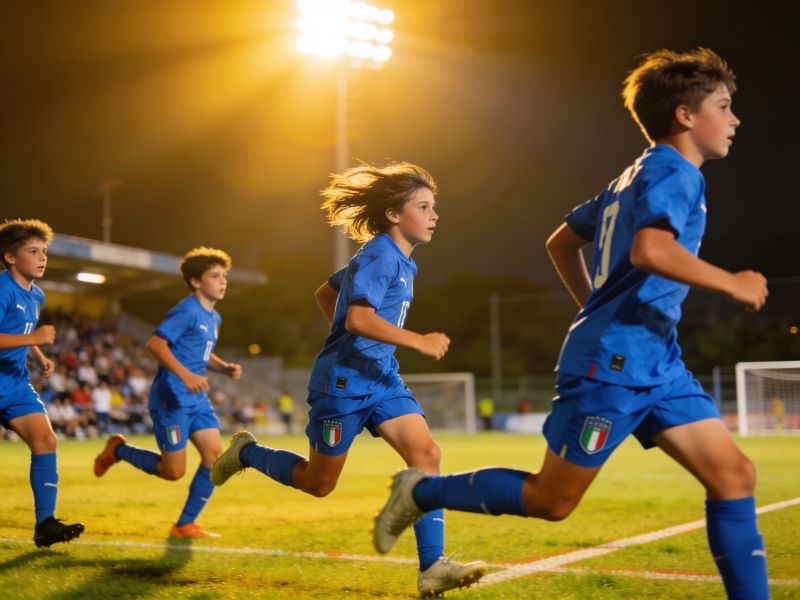
The federation's youth blueprint, launched quietly after the 2017 U20 World Cup bronze。shifted focus from physical readiness to cognitive speed. Coaches at the U19 and Italy U20 levels now prioritize decision-making under pressure over rigid shape. You see it in players like Cesare Casadei, who won the Golden Boot and Golden Ball in 2023 — a box-to-box midfielder comfortable receiving on the half-turn. Or Simone Pafundi, the left-footed trequartista who made his senior debut at 16. These aren't anomalies;they're products of a system that finally trusts technique over size.I spent time watching Italy U20's training camp in Coverciano last spring. The drills were telling: small-sided games with mandatory two-touch limits, rapid transitions where defenders were rewarded for breaking lines with passes rather than clearances. Carmine Nunziata, the head coach。barked instructions in short bursts — "Recycle!Switch!
Go!" — never lecturing. The session ended with a chaotic 8v8 on a half-pitch, no throw-ins, no corners. Just flow. "We lose games when we think too much," Nunziata told me afterward, shrugging. "So we train them to think faster than the opponent."The results are tangible but uneven. Italy U20 reached the 2023 World Cup final, losing narrowly to Uruguay. They've since qualified for the 2025 U20 World Cup with a squad featuring Tommaso Baldanzi and Francesco Pio Esposito — two players already capped at senior level. Yet the pipeline still leaks. Serie A clubs give youth minutes grudgingly;
only four of the 2023 final XI had logged more than 500 top-flight minutes the following season. That gap between youth success and senior integration remains Italy's stubborn problem, one the U20 setup can't solve alone.Still, watch an Italy U20 match now and you'll see something different from the old stereotypes. The backline steps up, the midfield rotates, the wingers cut inside. It's not tiki-taka。and it's not catenaccio. It's a hybrid — pragmatic but progressive. Whether that translates into senior World Cup trophies is another question. But for now, the Azzurrini are worth your attention. They play like a team that's been told the old rules no longer apply, and they're testing how far that freedom can take them.