
You can spot a kehuanpian cover from ten feet away. The colors are wrong—saturated neon greens bleeding into bruise-purple skies, rocket ships shaped like teardrops, a chrome robot with a human face half-melted into a console. These aren't sleek, focus-grouped Hollywood concepts. They're pulp. And that's exactly why they matter.Kehuanpian, literally "science fiction film" in Chinese, carries a specific visual DNA that's been overlooked outside niche circles. I first encountered it in a Beijing flea market around 2015—a stack of 1980s posters for films like Death Ray on Coral Island and The Flying Man from Mars. The printing was cheap, the anatomy was off。and the spaceships looked like they'd been welded together from bicycle parts. But the ambition was staggering. Directors with no budget and no precedent were trying to build entire universes out of cardboard and hand-painted glass. That scrappy energy defines the kehuanpian legacy more than any polished remake ever could.What makes this aesthetic so durable isn't nostalgia—it's the tension between sincerity and absurdity. In Flying Man, a hero delivers a five-minute monologue about saving humanity while standing in front of a visibly wrinkled backdrop. The camera lingers. No irony. That's the kehuanpian contract: you commit fully, even when the seams show. Modern directors like Frant Gwo have cited these films as foundational, but they've traded the handmade charm for CGI clarity. Some of us miss the wobble. A kehuanpian laser beam shouldn't look like a PowerPoint transition;it should look like someone dragged a flashlight across a painted wall.Streaming platforms have started digitizing these obscurities, and the results are genuinely strange. A 1990 kehuanpian called Thunderstorm Navigator resurfaced last year with restored audio—the dubbing is so flat and earnest it becomes hypnotic. I watched it twice and still can't tell you the plot. Doesn't matter. The rhythm of the edits, the way the camera holds on a model city for three seconds too long。the costumes that look like they were borrowed from a community theater production of Dune—that's the point. Kehuanpian isn't trying to be Blade Runner. It's trying to be something no one has permission to make. The result is often messy, occasionally transcendent, and always human.
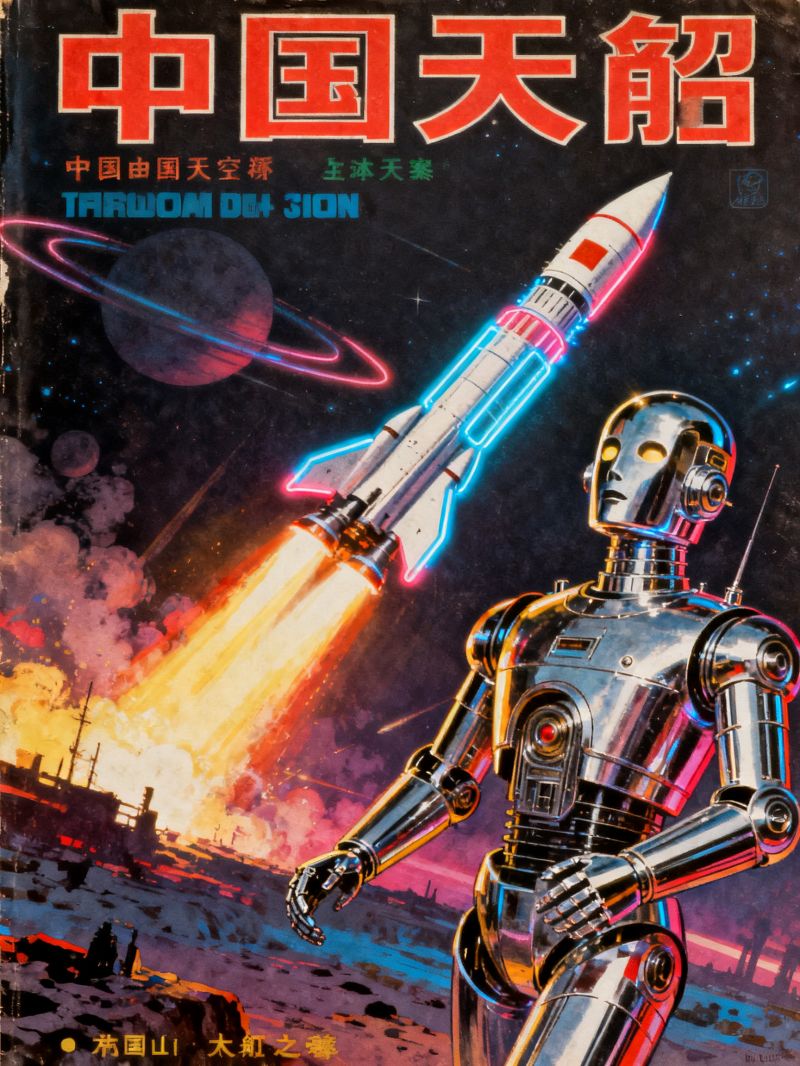
Preservation efforts remain scattered. No single archive owns the full library, and电影节 retrospectives tend to lump kehuanpian under "cult curiosities." That's a mistake. These films are the earliest evidence of a national imagination grappling with technology, and they did it without a blueprint. Laugh at the rubber tentacles if you want. I'll be over here rewatching a cracked VCD of Cosmic Chase, wondering how a team of twelve people convinced an entire country that a painted backdrop was another galaxy.