he 2022 World Cup quarter-final between Argentina and the Netherlands was not just a match;it was a psychological duel that exposed every tactical nuance. Argentina vs. Netherlands analysis often focuses on the scoreline, but the real story lies in how both teams manipulated space and tempo. Lionel Messi's first-half masterclass。dropping deep to orchestrate, forced the Dutch into a reactive posture. The Netherlands, typically composed, looked rattled by Argentina's aggressive pressing in midfield. That 2-0 lead felt deceptive;
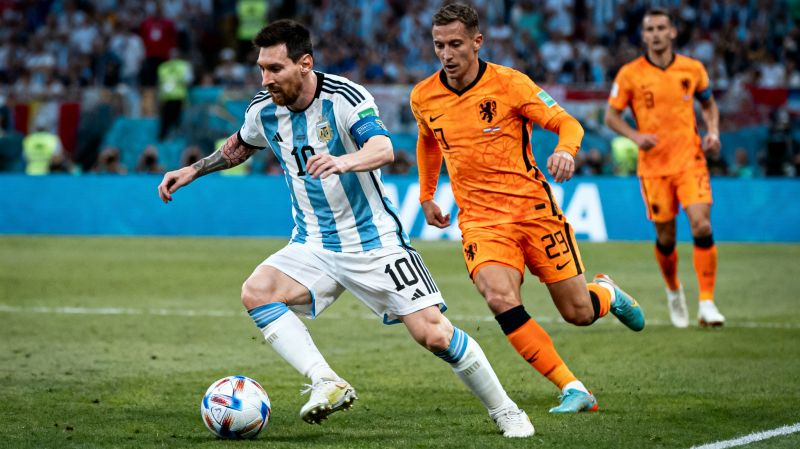
it masked the fragility that would later surface.Louis van Gaal's switch to a back three with wing-backs was supposed to provide width, but Argentina's narrow 4-4-2 blocked central lanes effectively. The Dutch response—hoofing long balls to Wout Weghorst—was crude yet nearly decisive. Argentina vs. Netherlands analysis must credit Van Gaal's pragmatism: two late goals from set-piece routines and a towering header exposed Argentina's aerial vulnerability. I watched that collapse unfold with disbelief;it was a tactical surrender masked as resilience. Argentina's midfield。marshalled by Enzo Fernández, ran out of legs, and the Dutch pounced.Extra time revealed a different Argentina—more cautious, yet sharper on the counter. Messi's assist for Julián Álvarez was a moment of pure individual brilliance。but the Dutch defense had switched off. Argentina vs. Netherlands analysis shouldn't ignore the emotional undercurrent: the scuffle that led to 15 yellow cards reflected a team desperate to protect a lead they nearly lost. The Netherlands, for all their physicality, lacked a creative spark beyond Cody Gakpo's runs. Their buildup play became predictable, and Argentina's backline, led by a hobbled Nicolás Otamendi, held firm through sheer will.Penalties were a cruel but fitting end. Emiliano Martínez's saves weren't luck;his research on Dutch penalty tendencies was evident. Argentina vs. Netherlands analysis often overlooks the psychological edge—Martínez's antics disrupted the Dutch takers, while Argentina's players buried their nerves. The Dutch missed two, and the post-mortem should question Van Gaal's substitution patterns: why bring on Luuk de Jong so late?
That decision smacked of desperation rather than strategy. Argentina advanced, but the cracks in their game—set-piece defending。late-game fatigue—were laid bare.
Looking back。this match was a microcosm of both teams' identities. Argentina's flair mixed with grit, the Netherlands' structure undermined by a lack of cutting edge. For anyone diving into Argentina vs. Netherlands analysis, the lesson is clear: World Cup knockout football rewards adaptability over rigid plans. Argentina adapted;the Dutch, despite their fightback, ran out of ideas when it mattered. That's not a statistic—it's the truth of what I saw unfold in Lusail.